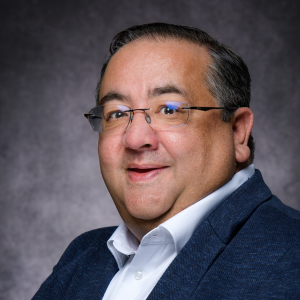

“European Sovereignty can only be achieved through collaboration and better threat intelligence”
“As a company, we’re best known in Wallonia and Luxembourg; a bit less so in Brussels and Flanders,” Mukherjee explains. “So it’s interesting for us to build new connections within the Belgian cyber ecosystem. Our membership of the Coalition — officially confirmed in 2025 — was therefore an obvious step. Participation in the working groups is particularly relevant for us. As with the events, they offer an excellent opportunity to connect with the wider cybersecurity community.”
Globally active in cybersecurity, ESET recognises the importance of understanding local market dynamics for building long-term relationships. “Each specific context requires its own approach. The way business is conducted is partly determined by culture and depends greatly on where the centre of economic gravity lies. For example, our end-customers in Luxembourg are often linked to the financial sector; in Brussels, we deal with key European and international organisations; and in Wallonia, our resellers typically serve the public and health sectors as well as multiple SMEs,” he explains.
Mukherjee sees that the drive towards greater collaboration is more necessary than ever. “Europe has put a series of regulatory initiatives in motion, such as the AI Act, NIS2 and DORA. Those are very valuable, but to evolve towards greater European sovereignty, this must be done in a more streamlined way,” Mukherjee says. “That means daring to share even more knowledge and data. No organisation or vendor has a monopoly on wisdom; European sovereignty can only be achieved through collaboration and better threat intelligence.”
Within this broader trend towards a more streamlined and resilient Europe, ESET also has its own specific strengths. “Having our headquarters in Bratislava, within Europe, supports us to take the lead towards greater European sovereignty. In addition, we can offer a high quality of threat intelligence. That is partly due to our scale: we employ no fewer than 2,000 full-time cyber analysts. But we also consistently play an active role on the frontier: in Ukraine, for example, we protect over 80% of the critical infrastructure, which allows us to make major leaps forward.”
That progress translates, to a significant degree, into the advanced implementation of AI across ESET’s highly diverse product range. “We’ve been applying machine-learning models since 1996 to analyse the massive amount of data we receive. When you consider that we protect more than one billion devices worldwide, it’s clear why this is a necessity,” he clarifies. “Today, around 750,000 samples are analysed per day by our models, which shows that ‘AI-native’ isn’t just a buzzword for us. Naturally, this technology is always paired with the expertise of our people. That combination is our path to success in the ever-escalating race against cybercriminals,” he concludes.