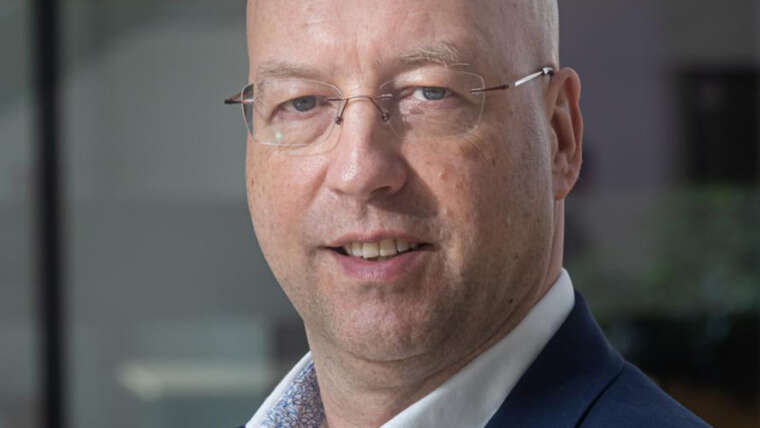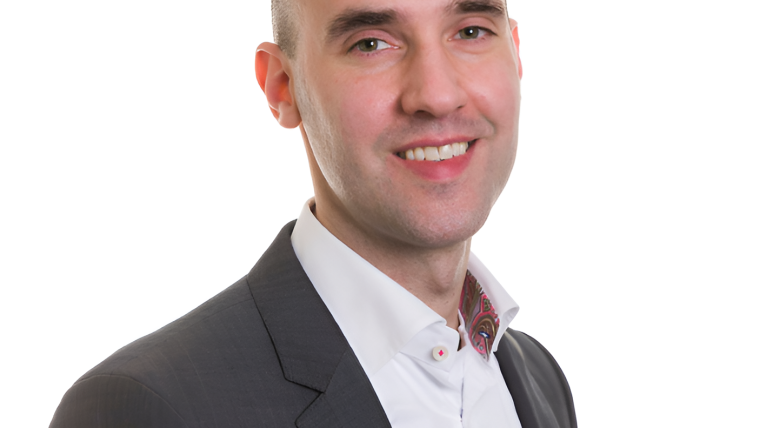


“Our approach is strongly business-driven, focused on making balanced security choices”
Although cybersecurity is receiving increasing attention from the business world, this has not automatically translated into improved security, particularly among small and medium-sized enterprises (SMEs). Clarence founded Guardiant Cyberdefense in 2024 with the aim of offering cybersecurity services and solutions to help bridge that gap.
Demystifying complexity
Clarence is no stranger to making sense of complex environments. Early in his career, he specialised in delivering software engineering projects to global multinationals in the technology, telecommunications, and insurance sectors. Since 2011, he has been a Brussels-based freelance security architect for several large organisations, including Proximus, BNP Paribas Fortis, SWIFT, and CM-MC.
This experience has strongly shaped the way he approaches cybersecurity today. “An architect needs to make sense of complex landscapes. That means understanding the technical details, of course, but it is just as important to explain their implications clearly to business and technical stakeholders.”
The ability to demystify complexity is Clarence’s trademark. Sometimes, this involves very specific architectural choices. At other times, it requires a much broader assessment of risks, dependencies and priorities. “The latter is what I truly enjoy doing and where I feel I add real value,” Clarence says.
Business risk and context are key
Guardiant positions itself as a specialist firm in cybersecurity advisory, consultancy, and implementation. The company works with large organisations as well as SMEs, but always starts from the same question: how can we ensure that the business is adequately protected against relevant threats? “Our approach is strongly business-driven. It is not about implementing technical measures for their own sake, but about making choices that fit the organisation’s reality, operational needs and risk profile”.
Compliance frameworks and obligations play an integral role in the sector, Clarence acknowledges, but they must serve as levers to improve security rather become ends in themselves. “Frameworks are important, but interpretation remains essential. You always need to look at risk and context. That context is obviously very different for an SME than for a large enterprise. The skill lies in understanding which patterns are relevant, and which solution fits the customer’s risk profile, scale and context.”
With AI, being pragmatic matters more than ever
Such a pragmatic approach is increasingly important as the threat landscape accelerates once again. AI is changing not only the way companies operate, but also the speed and scale at which attackers can act. This shift played a role in Guardiant joining the Belgian Cyber Security Coalition in 2025 and in Clarence contributing as co-chair of the Cybersecurity for AI Focus Group since 2026. “The Coalition is an excellent forum for peers. You see how others think about challenges and solutions to concrete problems. Furthermore, its composition, objectives, international participation and strong government support make this a unique network.”
For Guardiant, membership is not only about visibility, but about gaining knowledge while giving something back to the community. That spirit of exchange fits the company’s broader ambitions. Guardiant aims to grow and expand internationally without losing sight of its core purpose: making complex cybersecurity issues understandable, prioritizing according to business risk, and helping organisations meaningfully improve security while demonstrating compliance.